— FLO2 · Built Environment
Commercial Kitchens & Food Service Facilities
IAQ monitoring and fan energy optimisation for commercial kitchen and food service environments.
Home Built Environment Commercial Kitchens & Food Service Facilities
— FLO2 · Built Environment
IAQ monitoring and fan energy optimisation for commercial kitchen and food service environments.
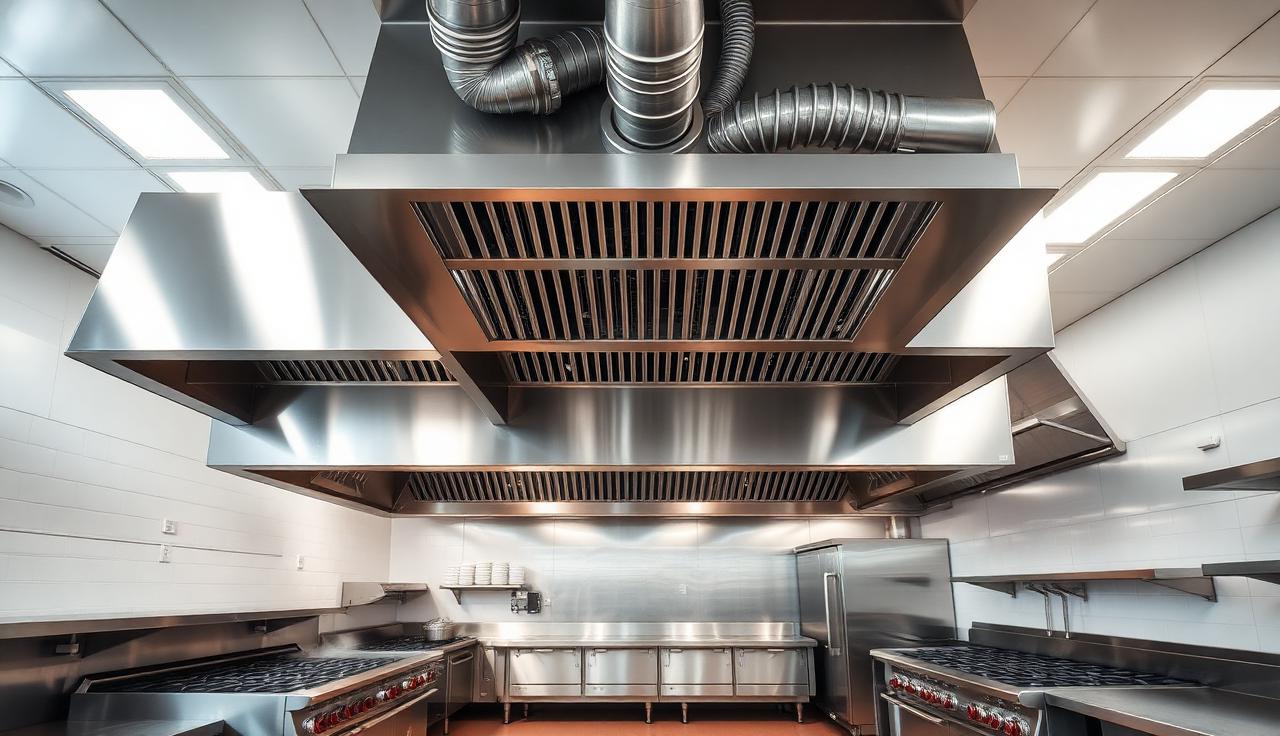
Commercial kitchens are among the most demanding indoor environments from an air quality and energy perspective. Exhaust fans, makeup air units and ventilation hoods operate continuously through service, typically at full speed regardless of cooking load. Fan power scales with the cube of speed: a 20 percent reduction in fan speed produces roughly 50 percent less energy consumption. In most installed kitchens, this relationship is never acted on.
Beyond energy, particulate matter, CO, TVOC and thermal load create conditions that affect staff across long working shifts and that regulators and certification bodies increasingly require to be monitored and documented.
Thirteen-parameter sensing with particular emphasis on CO, PM2.5, PM10, TVOC and temperature. Positioned to capture conditions at cook line, prep area and staff zones. Threshold alerts notify facility teams before conditions affect staff welfare or trigger regulatory concern.
FLO2 FAIR modulates exhaust fan and makeup air unit speed against real-time CO and particulate readings. Fans operate at the speed the cooking load requires, not at design maximum for the full service period.
Fresh air intake is matched to actual exhaust demand, preventing over-pressurisation and reducing the thermal load introduced by excessive fresh-air supply.
FLO2 IAQ+ is mains-powered with no battery dependency, designed for the continuous, uninterrupted monitoring that commercial kitchen environments require.
Exhaust fan energy reduction
30 to 60 percent
CO and PM within safe thresholds
Continuous
VFD payback period
Typically under 18 months
| Metric | Observed Range |
|---|---|
| Exhaust fan energy reduction | 30 to 60 percent |
| CO and PM within safe thresholds | Continuous |
| VFD payback period | Typically under 18 months |
| Installation disruption | Minimal, no ductwork changes required |
Deployed across Club Mahindra Resorts and Tamara Leisure Experiences, among others.
A site assessment quantifies current fan energy consumption, IAQ conditions and the energy recovery available through demand-based control, with a payback calculation included in the findings.
A structured site assessment identifies compliance gaps, energy losses and the remediation options available - before your next audit cycle.