— FLO2 · Built Environment
AHU Rooms & Central Plant
Performance monitoring and demand-based control for air handling units and central HVAC plant.
Home Built Environment AHU Rooms & Central Plant
— FLO2 · Built Environment
Performance monitoring and demand-based control for air handling units and central HVAC plant.
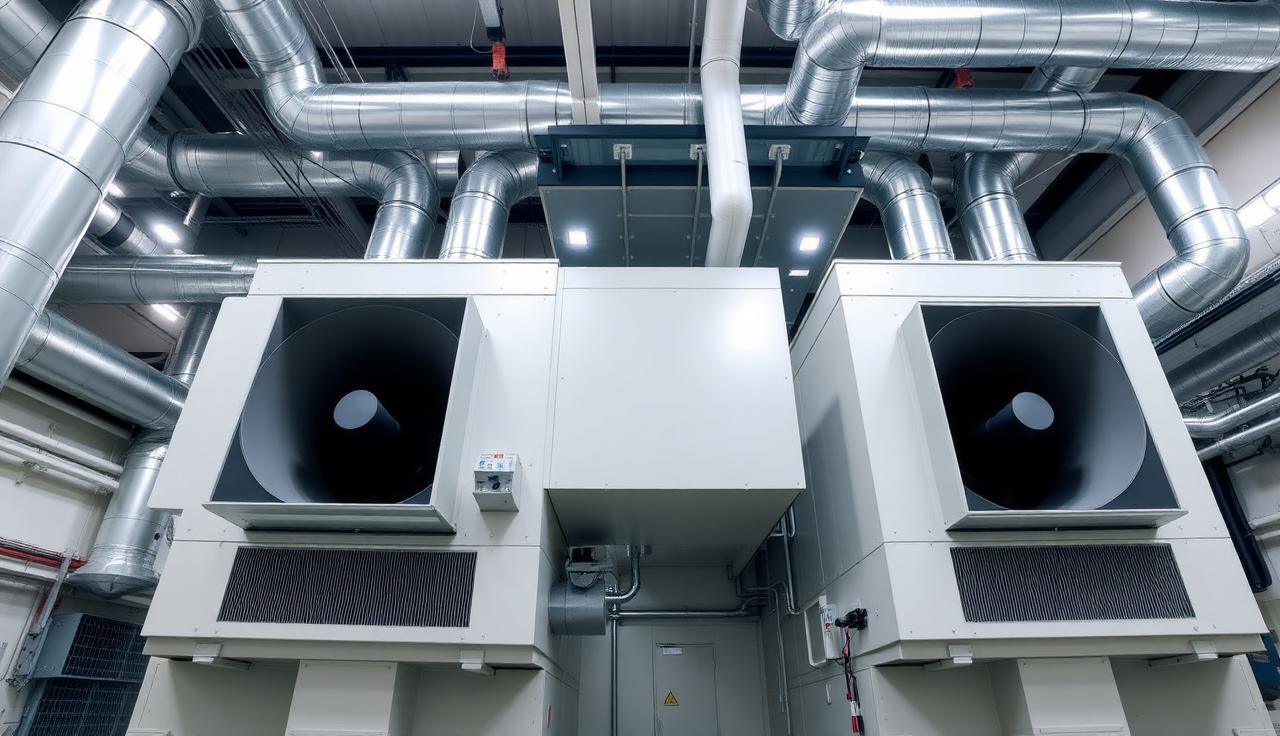
Air handling units are the primary energy consumers in most commercial HVAC systems and the primary point of intervention for both energy optimisation and IAQ control. In the majority of installed buildings, AHUs operate on fixed schedules at design airflow, with no adjustment for actual occupancy, outdoor conditions or real-time IAQ feedback.
The gap between design intent and operational reality is where most HVAC energy waste accumulates. FLO2 connects AHU control directly to the conditions it is intended to manage.
Fan speed modulated continuously against real-time IAQ readings and occupancy data from served zones. Fan energy, which scales with the cube of speed, is reduced significantly across typical part-load operating hours.
Outdoor air intake adjusted dynamically against CO₂ levels in served zones. Prevents both under-ventilation during high occupancy and unnecessary fresh-air load during low-occupancy periods.
Where outdoor enthalpy permits, FLO2 increases fresh air intake to reduce mechanical cooling demand. Particularly applicable in Bangalore and Hyderabad climates, where ambient conditions are favourable for extended periods.
Real-time visibility into supply air temperature, fan speed, damper position, filter differential pressure and energy consumption. Maintenance alerts flag filter loading and performance degradation before served zones are affected.
Modbus, BACnet and MQTT connectivity with existing BMS. No proprietary middleware required.
AHU fan energy reduction
30 to 60 percent
Fresh air supply
Matched to real-time zone CO₂
Filter and maintenance alerts
Automated
| Metric | Observed Range |
|---|---|
| AHU fan energy reduction | 30 to 60 percent |
| Fresh air supply | Matched to real-time zone CO₂ |
| Filter and maintenance alerts | Automated |
| BMS integration | Open protocol, no replacement required |
A plant-level assessment identifies current AHU energy consumption, ventilation efficiency and the savings available through demand-based control, with findings structured for engineering and sustainability review.
A structured site assessment identifies compliance gaps, energy losses and the remediation options available - before your next audit cycle.