Fresh Air Optimization for an Existing Heritage Building
One-Line Summary:
FLO₂ helped an existing heritage bank building in Chennai improve indoor freshness, support comfort, and reduce avoidable annual energy cost.
Project Snapshot:
| Parameter | Details |
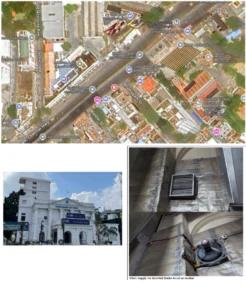
| Client / Project Reference | State Bank of India – Anna Salai |
| Sector | Banking |
| Location | Chennai |
| Building Type | Heritage commercial building |
| Conditioned Area | Approx. 8,400 sq. ft |
| Climate Context | Hot and humid |
| FLO₂ Intervention | Smart fresh air integration |
| Energy Impact | Approx. 14,176 kWh annual saving |
| Cost Impact | Approx. ₹1.13 lakh annual saving per unit |
| Occupant Benefit | Fresher air and improved comfort without disruptive retrofit |
Project Highlight:
A practical fresh air upgrade for an existing heritage building, with measurable annual energy and cost savings. This project is strongest as an existing-building modernization story. Heritage buildings often cannot be treated like new buildings. Fresh air improvement has to work within the limits of the existing architecture, HVAC system, and day-to-day operations. FLO₂ helped the building improve indoor freshness while delivering approx. 14,176 kWh annual energy saving and approx. ₹1.13 lakh annual saving per unit.
The Context:
Older and heritage commercial buildings often need better ventilation performance, but large-scale retrofits are not always practical. For this site, the goal was not to redesign the building. The goal was to make the existing system work more intelligently. The building needed fresher indoor air during occupied hours, without unnecessary fan operation, additional cooling load, or disruption to regular operations.
The FLO₂ Intervention:
FLO₂ was deployed as a smart fresh air integration layer for the existing building.
The system helped the building use fresh air more efficiently, improving indoor freshness while reducing avoidable energy use. Instead of relying on continuous operation, the fresh air strategy became more responsive to actual building demand. This approach was particularly suitable for a heritage setting where reliability, practicality, and minimal disruption were important.
What Changed:
Post-installation monitoring showed a more stable indoor environment, with stale-air build-up brought under better control during occupied hours. The system also reduced unnecessary fan operation and associated cooling demand, creating a measurable annual energy and cost benefit. For occupants, the improvement is experienced as fresher indoor air, reduced stuffiness, and better comfort through the working day.
Impact Delivered:
| Area | Result |
| Energy Efficiency | Approx. 14,176 kWh annual saving |
| Cost Saving | Approx. ₹1.13 lakh annual saving per unit |
| Existing Building Fit | Practical for a heritage commercial building |
| Indoor Experience | Reduced stuffiness and improved freshness |
| Comfort | Temperature and humidity remained generally stable |
| Productivity Link | Fresher indoor air supports alertness, comfort, and well-being |
Project Outcome:
For this heritage building, FLO₂ delivered a practical indoor air upgrade without a disruptive retrofit.
The project shows how existing buildings can improve freshness, comfort, and energy performance by using fresh air more intelligently.